What Is A Dental Implant?
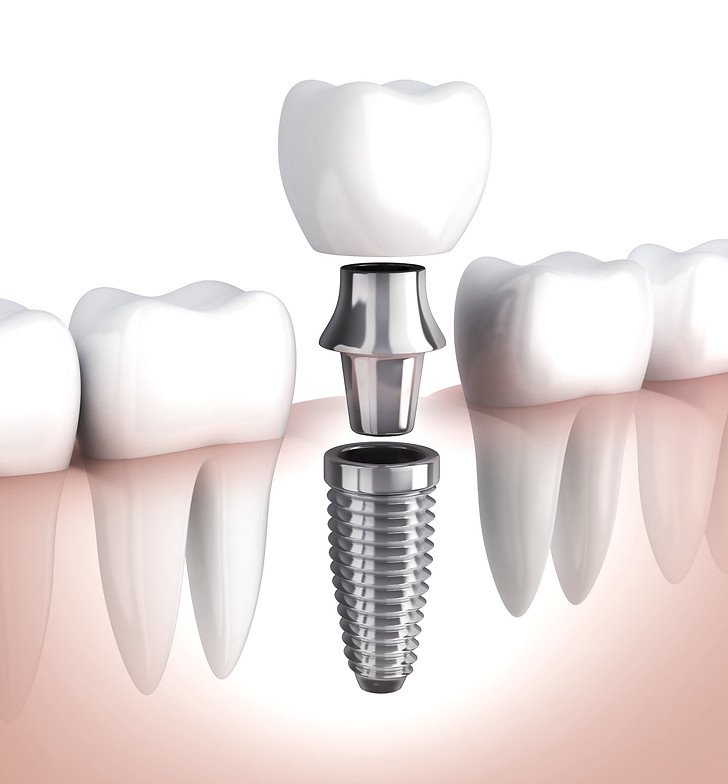
Dental implants, or 'implants', are tooth root replacements. This is an important distinction. Many people who have heard of dental implants, or even see the photo adjacent, may think that a dental implant is " a post with a tooth on top." Actually, a dental implant is just the part that you don't see. The tooth, or ' crown', is not part of the implant itself.
The three main components you can expect to receive as part of having a dental implant placed are:
1) The Implant
a dental implant is the tooth "root" replacement
2) The Abutment
An abutment connects the crown to the dental implant. There are two types of abutments you need to be aware of: Healing and Final
3) The Crown
The crown is what you most likely think of when you think "tooth". There are two types of crowns you need to be aware of: Temporary and Final
Terms Defined
Fabrication
the process of a specialized dental laboratory manufacturing custom dental prosthetics including single crowns, traditional or fixed dentures, mouth guards, etc.
From Consultation to Restoration | The Dental Implant Process
A seamless approach to implant placement- expand arrows for more information

STEP 1
Recognizing the Need for a Dental Implant
There are three common ways you might come to realize it's time for a dental implant:
1. You're advised by your general dentist or dental specialist
2. You've previously had root canal therapy with your endodontist, but the tooth is still failing
3. You've previously had a tooth extracted and now you'd like a replacement for function or aesthetics_edited.png)
STEP 2
Schedule A Consultation with an Oral Surgeon
If you're unfamiliar with dental implants, you should start with discussing your case with an oral surgeon. Every patient is unique when it comes to planning a dental implant placement. Factors like medical history, diet and behaviors, bone density, surrounding structures, etc. will contribute to your treatment plan. These factors will also play a role in possible complications, though serious complications are rare.
Youre oral surgeon will evaluate these factors using a cone-beam computed tomography scan, or CBCT scan.
STEP 3
Schedule Surgery
Depending on the reason you consulted to discuss a dental implant, you may be eager to schedule surgery, or you may be inclined to wait until a time that is better suited to you financially, medically, or otherwise.
What to Expect the Day of Surgery
Each case is a little different based on any number of the factors we mentioned above; however, most single implant placement surgeries last between 30-45 minutes. Most patients report feeling little to no discomfort in the hours following, and most are able to return to normal activity same-day or next-day with a modified diet.
-
Surgeries with IV Sedation

-
Surgeries with Localized Numbing and/ or Nitrous Oxide

Serious dental implant complications are rare, but there are some common post-operative issues to look out for:
-
Excessive Bleeding
-
Implant Failure
-
Sinus Communication
-
Generalized Discomfort
-
Nerve Involvement
Understanding Potential Risks
When you search "tooth replacement near me," you'll find countless options- but not all the experiences are created equal. Dental implants are a surgical procedure, and oral surgeons are the specialists uniquely trained to perform them precision and predictability.
Because oral surgeons complete hundreds of implant surgeries each year, they bring advanced surgical expertise, a deep understanding of facial anatomy, and the skill to manage even the most complex cases. The result? Greater, faster recovery, and long-term success you can trust.
Our Surgeons offer a Lifetime Guarantee on our dental implants, and of the thousands we've placed, our patients have 99% long-term success rate.

THE EXPERTISE BEHIND EVERY SUCCESSFUL IMPLANT
From Consultation to Confidence | in 3 Steps
STEP 1
Understand Your Case
Our administrative team supports our surgeons in ensuring that you understand your treatment options prior to considering surgery. This begins with capturing the best x-ray imaging to diagnose and plan your surgical care. Your surgeon and patient care coordinator are experts, so be sure to use your consultation as an opportunity to ask any questions you may have after the surgeon completes his exam, Successful surgeries with understanding your case.
STEP 2
Plan A Financially Comfortable Treatment Plan
From the diagnosis, your patient care coordinator will develop a treatment plan estimate to outline the cost o fall treatment options you discussed with your surgeon. prior to your visit, our team verified any dental insurance policy you provided when you scheduled. Those benefits will be carefully applied to your treatment plan to give you an estimated out-of-pocket obligation for those services not covered in part or in full by your insurance provider.
If the out-of-pocket cost of your treatment plan is prohibitive, your patient care coordinator is able to discuss a number of financing options that may work for you. There may also be an opportunity to adjust the timeline of your treatment to "phase" care in more financially feasible increments.
Since payment is due at time of service, our team does everything possible to ensure all foreseeable costs are detailed up front. We are proud that we can be among the few medical providers with whom you don't have to blindly commit to recommended treatment only to be surprised with bills 2-4 weeks later. Our team takes the up front approach to discussing a financially comfortable treatment plan.STEP 3
Smile Again
If successful surgeries start with understanding your case, then they certainly conclude with understanding your post-operative care. Our clinical team works with your surgeon to provide the most detailed pre- and post-operative care instructions so that healing from surgery isn't holding you back from returning to daily life. Dental treatment, especially oral surgery, can unexpectedly put a stop to your routines and comfort. Completing surgery with New Albany Oral and Facial Surgery mean that you'll be back to smiling again in no time.